
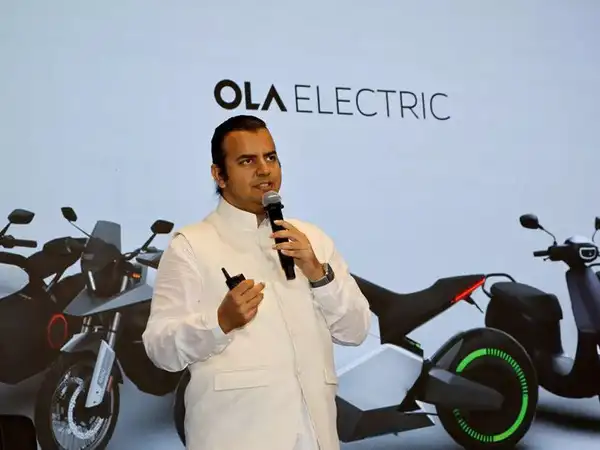
Ola Electric’s board approved a Rs 2,000 crore investment in its two technology subsidiaries on May 15, 2026. Rs 1,500 crore will go into Ola Electric Technologies, the company’s core EV development and manufacturing unit. Rs 500 crore will go into Ola Cell Technologies, the battery cell manufacturing arm operating out of India’s only commissioned gigafactory at Krishnagiri, Tamil Nadu. Both tranches will be deployed through compulsory convertible preference shares, with the investment expected to be completed by May 14, 2027.
The announcement arrives against a backdrop that is difficult to describe as anything other than a company in turnaround mode. In FY2025, Ola Electric commanded 30% of India’s electric two-wheeler market. By April 2026, that share had fallen to 8.18%, with the company ranked fifth behind TVS Motor, Bajaj Auto, Ather Energy, and Hero MotoCorp. FY2026 sales came in at approximately 1.5 lakh units against a management guidance of 3.25 lakh units, less than half the target. ICRA, the credit rating agency, downgraded Ola Electric Technologies in May 2026, citing falling sales, sustained losses, and an uncertain timeline to profitability. The stock, which listed at IPO price, has fallen approximately 64% from that level and has traded near all-time lows through early 2026.
The Rs 2,000 crore board approval is the company’s clearest signal yet that it believes the cell manufacturing bet, not the scooter business alone, is the lever that changes its trajectory.
Policy Momentum
The investment decision lands at a moment when the structural case for domestic battery cell manufacturing has never been stronger or more strategically urgent. India currently depends almost entirely on imported battery cells, with the Production Linked Incentive (PLI) scheme for Advanced Chemistry Cells (ACC) having commissioned only 1.4 GWh of domestic capacity as of October 2025, all from Ola Electric’s Krishnagiri gigafactory.
The West Asia crisis and the resulting pressure on India’s foreign exchange reserves have made energy import dependency a live political and economic issue, not an abstract policy concern. PM Modi’s recent appeals to reduce fuel consumption and switch to electric vehicles, backed by his own convoy reduction directive, have created a policy environment that is actively pushing EV adoption. For Ola Electric’s cell business, this context is a tailwind: every policy push for EV adoption expands the domestic market for the cells it manufactures.
The PM E-DRIVE scheme, with Rs 10,900 crore in total outlay, is accelerating EV infrastructure deployment. The PLI-ACC scheme, however partially executed so far, remains the most structurally important programme for Ola’s cell business, as it defines the subsidy and incentive framework within which domestic cell manufacturing competes against imported alternatives.
Ground-Level Proof: What the Gigafactory Has Built
Ola Electric’s Krishnagiri gigafactory is genuinely significant infrastructure by any Indian standard. The facility is currently India’s only commissioned gigafactory, with 6 GWh of installed capacity already operational. The company’s proprietary 4680 Bharat Cell technology, a large-format cylindrical cell format adapted for Indian conditions, has been deployed internally in its scooter fleet. Gigafactory output doubled to 72,000 cells in Q3 FY2026, though cell revenue for the full year ended March 2026 was Rs 730 million, a number that reflects early-stage commercial deployment rather than scaled operations.
The expansion roadmap is substantial: 12 GWh by July 2027, and 20 GWh by the end of FY2028. Approximately 6.5 GWh of that future capacity is earmarked for third-party sales to other automakers, positioning Ola Cell Technologies as a merchant cell supplier for India’s broader EV industry rather than a captive supplier to its own scooter business. The company has invested approximately Rs 5,300 crore in manufacturing, battery technology, and R&D since inception, and management has stated the heavy capex phase is now largely behind it.
The revenue potential Ola’s management has projected for the cell business, Rs 15,000 crore to Rs 20,000 crore over the coming years, is contingent on third-party sales materialising at scale and on the 4680 Bharat Cell achieving the cost efficiency targets that make it competitive against imported alternatives from China and South Korea.
Segment Snapshot: The Scooter Business That Funds the Bet
The automotive segment that is funding this cell ambition is under severe pressure. FY2026 EV unit revenue was Rs 47.17 billion, a figure that represents a dramatic contraction from FY2025 levels. The Q3 FY2026 quarter was the worst single quarter since the company’s listing: revenue of Rs 470 crore, down 55% year-on-year and 32% sequentially, against a net loss of Rs 487 crore. EBITDA margin for that quarter was negative 68.7%. For the trailing twelve months to March 2026, net loss was approximately Rs 2,203 crore on revenue of Rs 2,599 crore.
The competitive dynamics that produced these numbers are structural, not cyclical. TVS Motor, Bajaj Auto, Ather Energy, and Hero MotoCorp have each built out distribution networks, service infrastructure, and product portfolios that Ola Electric’s early-mover advantage could not withstand when product quality and after-sales execution became the deciding factors for mainstream buyers. The Central Consumer Protection Authority (CCPA) opened an investigation into thousands of service complaints against Ola Electric, a development that directly damaged brand confidence in a segment where trust is a primary purchase driver.
Ola Electric’s management response has included rationalising the store network to approximately 700 outlets, targeting quarterly operating expenditure of Rs 250-300 crore against the Rs 430 crore run rate in Q3 FY2026, launching a Hyperservice initiative to reduce repair wait times, and progressively lowering its break-even volume target: from 50,000 units per quarter in Q3 FY2025, to 25,000 units, to the current target of 15,000 units per quarter as cost structures have been tightened.
A modest recovery in volumes was visible entering Q4 FY2026, with April 2026 sales of approximately 25,000-27,000 units representing sequential improvement, though the 38.6% year-on-year decline for that month confirmed that the market share recovery from legacy competitors remains a multi-quarter exercise.
The Strategic Logic: Why Cells Before Scooters
The Rs 2,000 crore board approval is not primarily a bet on selling more scooters. It is a bet that vertical integration into cell manufacturing is the only way Ola Electric can achieve the unit economics needed to compete profitably against TVS, Bajaj, and Ather, all of which source cells from established global suppliers at competitive rates.
The logic runs as follows. Every electric scooter sold in India today contains battery cells sourced almost entirely from imports, primarily from Chinese and Korean manufacturers. The import cost, combined with logistics and customs, represents a significant component of the variable cost per vehicle. A company that manufactures its own cells domestically, at scale, can undercut that import cost structure and achieve gross margin improvement without needing to raise vehicle prices or compromise on specifications.
Ola Electric’s gross margin in Q3 FY2026 was 34.3%, an improvement over prior quarters despite the revenue collapse. Management attributes this to cost rationalisation and early benefits from internal cell deployment. If the 4680 Bharat Cell achieves its targeted cost efficiency at 12 GWh scale, the gross margin could improve further, providing the operating leverage that analysts have been looking for.
ICRA acknowledges this logic but is cautious: “Ola Electric’s push into battery cell manufacturing and stationary energy storage is viewed as a long-term positive, strengthening its localisation strategy and reducing dependence on imports. However, these projects require significant capital and currently have limited revenue visibility, making them a near- to medium-term risk.”
That is the precise tension the Rs 2,000 crore investment is navigating: the cell business requires capital now, but the payoff is 18 to 36 months away. Whether the scooter business generates enough cash and investor confidence to bridge that gap is the central question facing the company.
What Comes Next
Three variables will determine whether the Rs 2,000 crore investment is a turning point or a further extension of the burn cycle.
The first is scooter volume recovery. The cell business cannot become a profitable standalone entity quickly enough to compensate for a continued scooter sales decline. Ola needs its Gen-3 S1 series and Roadster motorcycle deliveries to scale consistently through FY2027 to rebuild operating leverage in the automotive segment.
The second is third-party cell sales. The 6.5 GWh of future gigafactory capacity earmarked for external automakers represents an entirely new revenue stream that does not exist today. Ola Electric has confirmed it is in discussions with domestic and global automakers to supply cells and battery packs. If even one or two meaningful supply agreements are signed and publicly disclosed in the next two to three quarters, the narrative around the cell business changes materially.
The third is the fuel price environment. If India’s domestic petrol and diesel prices are decontrolled partially to reflect global crude reality, the total cost of ownership advantage of electric scooters widens sharply overnight, driving a demand rebound that benefits all E2W manufacturers but would disproportionately help a volume leader trying to recover lost ground.
Goldman Sachs has called the turnaround “prolonged.” Emkay Global downgraded the stock to Sell with a Rs 20 target. ICRA warns cost-cutting alone will not drive profitability. The contrarian case, articulated by the company’s own management, is that the investment cycle is over, the margin trajectory is improving, and the cell business is building the infrastructure that India’s entire EV industry will eventually need.
Both views can be simultaneously correct. The investment cycle may be over, and the cell business may be strategically sound, and the company may still face a difficult 18 to 24 months before any of that translates into a financial story that investors find compelling.
India’s EV market does not lack ambition. Ola Electric’s Rs 2,000 crore board approval is proof that it has not run out of conviction either. Whether conviction is enough, without a faster recovery in the business that is actually generating revenue today, is the question FY2027 will answer.