India’s electric three-wheeler (e-3W) industry opened FY2027 with 64,549 units sold in April 2026, a 3% year-on-year increase over April 2025’s 62,489 units and a 1.5% uptick month-on-month, according to Vahan registration data. Those numbers alone are solid. But the story underneath them is about a market undergoing a quiet consolidation, where legacy OEMs with deep distribution, safety-compliant products, and service networks are systematically pulling volume away from the regional manufacturers that pioneered the segment.
This April milestone comes on the back of the e-3W industry hitting a record 8,30,819 units in FY2026, the first time the segment has crossed the 8-lakh mark.
The Top-Three Lock-In
The sharpest signal from April’s numbers: Mahindra Last Mile Mobility (MLMM), Bajaj Auto, and TVS Motor Company together sold 23,063 units, a 36% share of total retail. A year ago, not a single one of them would have commanded this kind of combined weight. Today, they do, and the gap between them and the rest of the field is growing.
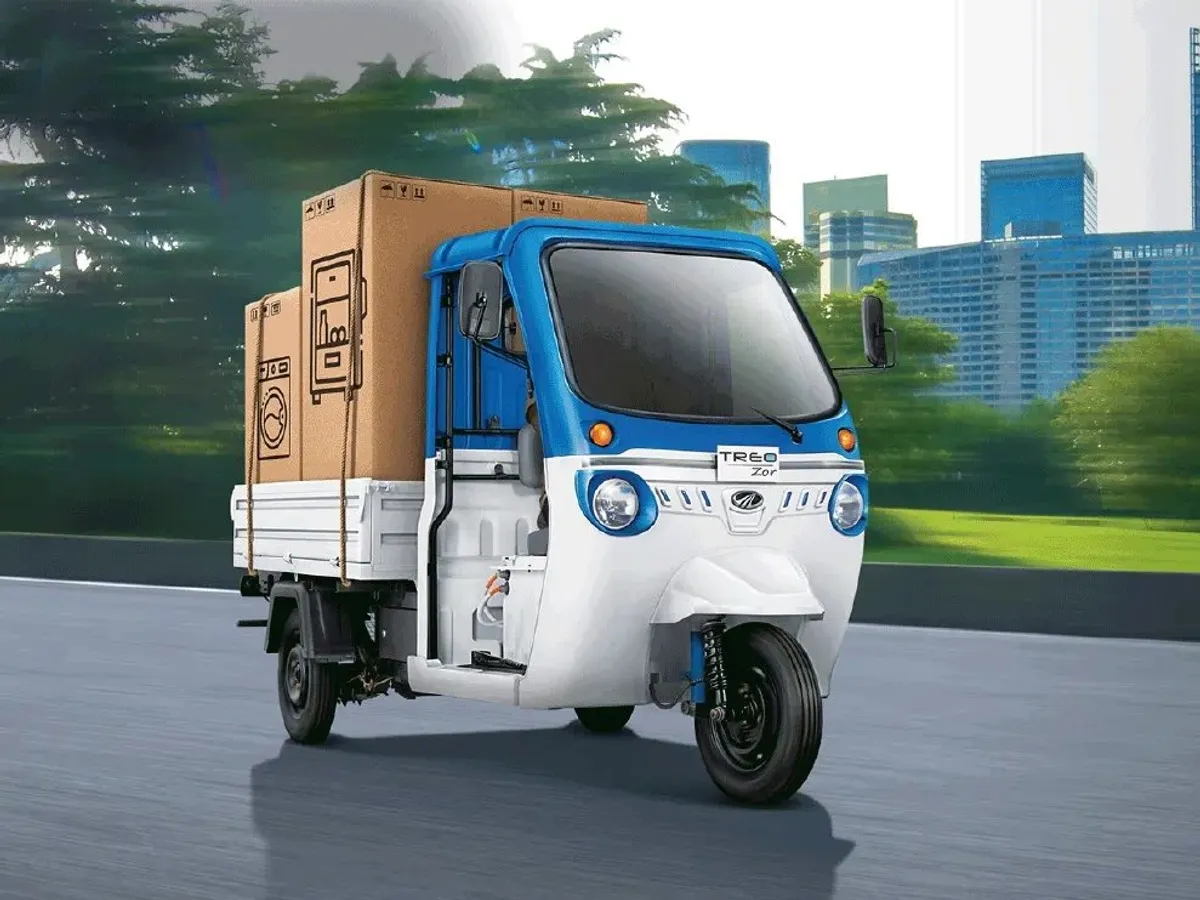
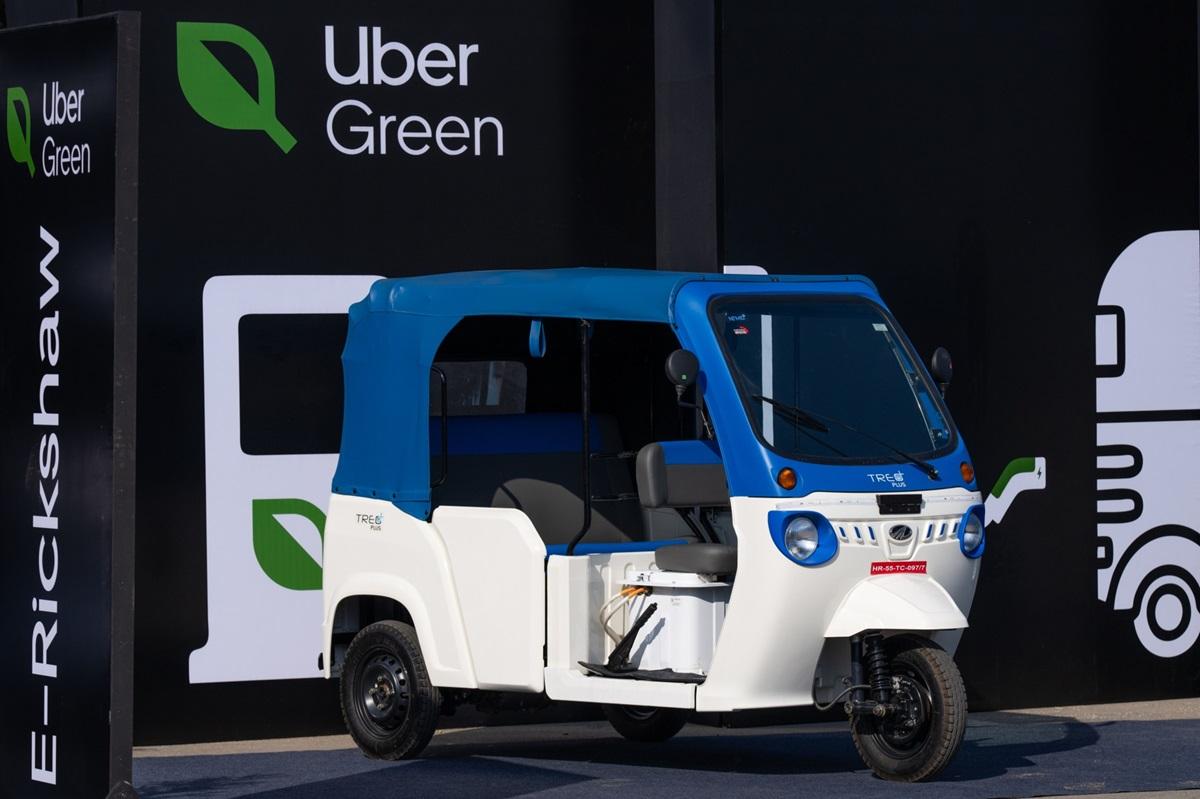
MLMM led with 10,292 units, up 83% YoY, giving the company a 16% market share for the month. This is only the third time MLMM has crossed 10,000 units in a single month, with the previous two instances being October 2025 (11,861 units) and November 2025 (10,777 units). The company has now outsold Bajaj in 11 of the last 13 months, a dominance that reflects the strength of its multi-model portfolio spanning the Treo, Treo Plus, Treo Zor, Treo Yaari, Zor Grand, e-Alfa Plus, e-Alfa Cargo, and the recently launched UDO. In April, the gap between MLMM and Bajaj was just 567 units, close enough to keep the rivalry tense heading into FY2027.
Bajaj Auto posted its highest-ever monthly e-3W sales at 9,725 units, a 77% YoY surge topping its previous record of 9,051 units from March 2026. The company’s market share trajectory tells its own story: from 2% in FY2024 to 7% in FY2025 to 11% in FY2026. Its GoGo range, which now includes the Riki for the mass-market e-rickshaw sub-segment and the Wego P9018, claimed to offer India’s longest range of 296 km in the e-3W category, has given Bajaj a credible multi-price-point play.
TVS Motor held its No. 3 ranking for the fourth consecutive month, delivering 3,046 units in April, a 152% YoY jump and its best monthly performance since entering the e-3W segment. The King EV Max passenger and King Kargo HD EV cargo models are gaining visible traction, pushing TVS past the 5% market share threshold for the first time.
The Squeeze on Regional Players
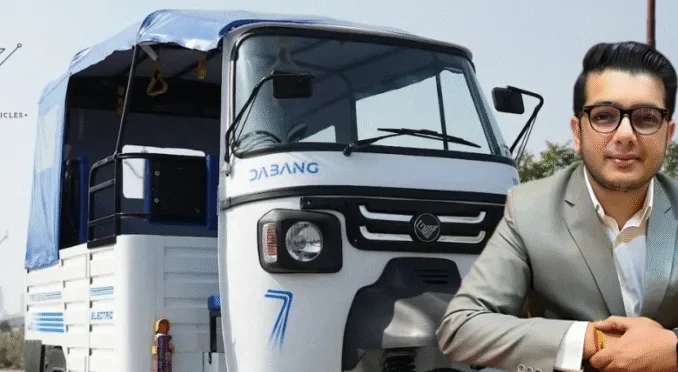
What the top-line growth masks is a significant volume transfer within the segment. Ten of the Top 20 e-3W companies posted year-on-year sales declines in April 2026. YC Electric Vehicles, a longstanding Delhi-based player, fell 43% YoY to 1,932 units. Rajasthan-based Saera Auto (Mayuri brand) dropped 23% YoY to 1,388 units. Haryana-based Dilli Electric Auto, which manufactures the CityLife range of e-rickshaws, fell 23% YoY to 1,327 units, and its market share has slipped to 2.60% in FY2026 from 4% two years prior.
The pattern is consistent: buyers across individual-owner and fleet-operator categories are increasingly choosing better-built, safer products from companies that can back them with nationwide service infrastructure. The e-rickshaw, once the almost exclusive domain of small regional OEMs, is now a battleground for MLMM, Bajaj, TVS, and TI Mobility. That’s a structural shift, not a cyclical blip.
The lone exception in the mid-tier: Piaggio Vehicles, which posted a 4% YoY increase with 1,181 units, demonstrating that product quality and brand legacy can still hold ground even amid intense pressure from larger players.
Policy Momentum
The government’s policy architecture continues to provide a structural tailwind. The PM e-Drive Scheme, extended to cover e-3Ws including e-rickshaws and e-carts through March 31, 2028, keeps demand support in place, albeit with reduced incentives compared to the earlier framework.
While the incentive reduction introduces some friction, the extension itself signals policy continuity that gives OEMs and fleet operators the confidence to commit capital to electric. The broader PM E-DRIVE umbrella and PLI-ACC scheme for advanced battery manufacturing continue to underpin the ecosystem’s longer-term supply-side build-out.
EV vs CNG: The Market Share Gap Widens
Perhaps the clearest indicator of structural EV adoption is what’s happening to the CNG three-wheeler. In April 2026, electric 3Ws held a 60% share of the overall three-wheeler market (1,06,905 units total), while CNG’s share dropped to 24%, down from 25% in January 2026 and well below the 30% it commanded in FY2024.
CNG retail registrations have declined every single month in CY2026 so far: from 31,376 units in January to 29,910 in February, 27,589 in March, and 25,696 in April. A sustained series of price hikes, CNG in Mumbai now costs ₹81 per kg, up ₹4 per kg since December 2025, is eroding the total cost of ownership case for CNG operators. Against this, an e-3W offers a running cost of approximately ₹1.40 per kilometre versus around ₹1.40-₹2.00 per kilometre for a CNG equivalent at current fuel prices — a compelling arithmetic for the cost-conscious last-mile operator.
What Comes Next
The record 8,30,819 units of FY2026 sets a high base. Even a 10% YoY increase would push the segment to over 9 lakh units in FY2027, a target that looks achievable given the current trajectory, but not guaranteed. April’s 64,549 units is a reasonable start, though the momentum will need to accelerate meaningfully in the months ahead to reach that milestone.
Two macro factors could tilt the balance further toward EVs in FY2027: the Iran oil crisis, which has sharpened the national conversation around fuel import dependency, and the continued erosion of CNG’s cost-competitiveness as fuel prices rise. Both work in favour of electrification. The risk to watch: whether reduced PM e-Drive incentives slow adoption in the price-sensitive mass e-rickshaw category, where buyer decisions are made on margins of hundreds of rupees, not thousands.
The consolidation of the e-3W market around three legacy OEMs is accelerating. For the segment to grow past 9 lakh units in FY2027, those three will need to pull, and the ecosystem around them, from charging infrastructure to financing access for individual auto operators, will need to follow.